Selecting the right trailer type is critical to ensuring your cargo is transported safely, efficiently, and cost-effectively. Different trailer types are designed for various industries, cargo requirements, and environmental conditions. Below is an overview of the major trailer types used in freight transportation, listed alphabetically.
Box Truck
A box truck, also known as a cube truck or straight truck, has a cargo area integrated into the same chassis as the cab. These trucks are ideal for local and expedited freight deliveries. They provide a cost-effective solution for businesses that need to transport smaller loads without requiring a full-size trailer.
Key Features: Compact and efficient for local deliveries, enclosed for cargo protection
Max Freight Weight: 18,000-26,000 lbs.
Industries Commonly Used In: Retail, moving services, small-scale logistics
Conestoga Trailer
Conestoga trailers feature a retractable, sliding tarp system that protects cargo from the elements while providing the loading versatility of a flatbed. These trailers eliminate the need for traditional tarping, reducing the risk of damage to sensitive freight and improving efficiency during loading and unloading.
Key Features: Sliding tarp system for easy access, protects cargo from elements
Max Freight Weight: 42,000-45,000 lbs.
Industries Commonly Used In: Aerospace, manufacturing, industrial equipment transport
Curtainside Trailer
Curtainside trailers have a rigid top, front, and rear, with flexible side tarps that allow for side loading and unloading. These trailers are excellent for freight requiring weather protection and quick side access, making them a hybrid between a flatbed and a dry van.
Key Feature(s): Flexible tarp system for side loading, weather protection
Max Freight Weight: 40,000-43,000 lbs.
Industries Commonly Used In: Construction, automotive, manufacturing
Double-Drop (Lowboy) Trailer
Also known as a lowboy, this trailer has a deck positioned lower than standard flatbeds, allowing it to transport tall and oversized freight such as heavy machinery and industrial equipment. The lowered design ensures stability and compliance with height restrictions.
Key Feature(s): Designed for taller freight, lowered deck for stability
Max Freight Weight: 45,000 lbs.
Industries Commonly Used In: Construction, heavy equipment, agriculture
Drop-Deck/Step-Deck Trailer
Drop-Deck (also known as Step-Deck) trailers are designed with two deck levels to accommodate taller freight. These trailers allow cargo to be transported without exceeding height restrictions. They are commonly used for transporting machinery, construction equipment, and other oversized loads.
Key Feature(s): Two-level deck for taller cargo, allows for easier loading of large equipment
Max Freight Weight: 45,000-48,000 lbs.
Industries Commonly Used In: Construction, agriculture, industrial equipment transport
Dry Van Trailer
Dry vans are the most common trailer type, used for transporting non-perishable goods such as clothing, electronics, and household items. These fully enclosed trailers protect freight from weather, theft, and external damage, making them ideal for standard shipments.
Key Feature(s): Enclosed design for cargo protection, versatile and cost-effective
Max Freight Weight: 42,000-45,000 lbs.
Industries Commonly Used In: Retail, consumer goods, general freight
Extendable Drop-Deck Trailer
Extendable Drop-Deck Trailers are designed to transport long and oversized freight while maintaining a lower deck height for increased clearance. This type of trailer is ideal for industries that require flexibility in hauling large equipment, construction materials, and other oversized cargo while ensuring stability and compliance with road regulations.
Key Feature(s): Adjustable deck for longer loads, supports oversized cargo
Max Freight Weight: 43,000 lbs.
Industries Commonly Used In: Construction, manufacturing, energy sector
Extendable RGN Trailer
Extendable RGN (Removable Gooseneck) trailers are designed for transporting extremely long and oversized freight. The extendable feature allows the well to be lengthened, providing additional space. This trailer type is ideal for industries that need to move oversized, self-propelled cargo while maintaining stability and compliance with road regulations.
Key Feature(s): Extendable well for longer cargo, detachable gooseneck for easy loading
Max Freight Weight: 120,000-150,000 lbs.
Industries Commonly Used In: Heavy equipment transport, construction, energy sector
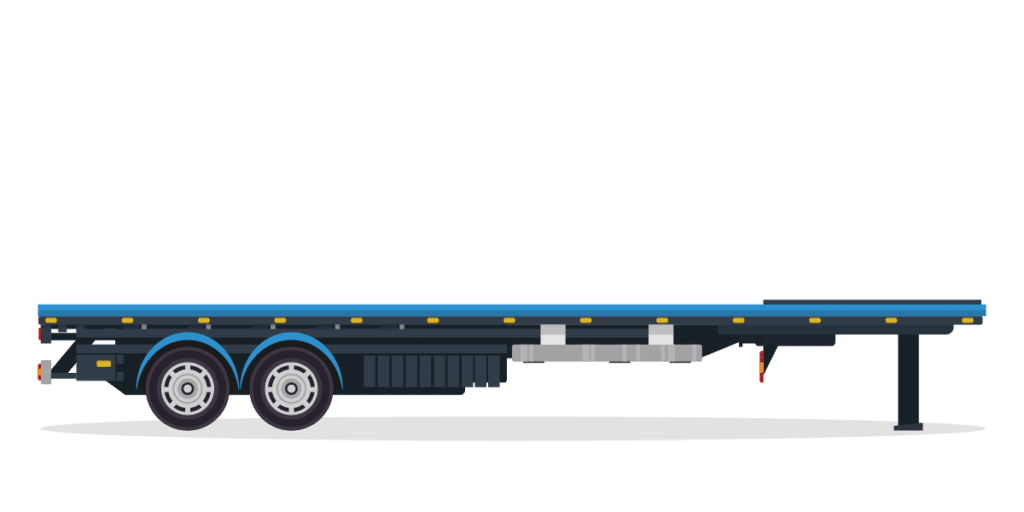
Flatbed Trailer
Flatbed trailers are versatile and used for transporting oversized cargo such as construction materials, steel, and lumber. With open sides and no roof, they allow for easy loading and unloading from any direction.
Key Feature(s): Open deck for flexible loading, supports oversized freight
Max Freight Weight: 46,000-48,000 lbs.
Industries Commonly Used In: Construction, industrial materials, agriculture
Hot Shot Trailer
Hot shot trailers are smaller flatbed-style trailers pulled by heavy-duty pickup trucks. They are ideal for urgent and shorter-distance shipments, often used for time-sensitive deliveries that require a more flexible and cost-effective solution.
Key Feature(s): Ideal for expedited and LTL freight, does not require a full-size truck
Max Freight Weight: 16,500 lbs.
Industries Commonly Used In: Oil and gas, small-scale manufacturing, local transport
Refrigerated Trailer (Reefer)
Refrigerated trailers, or reefers, are used to transport temperature-sensitive goods such as food, pharmaceuticals, and perishable items. The climate control system ensures that goods remain within required temperature ranges throughout transit.
Industries Commonly Used In: Food and beverage, pharmaceuticals, agriculture
Removable Gooseneck (RGN) Trailer
RGN trailers allow for loading and unloading by detaching the front gooseneck, creating a ramp. These trailers are commonly used for hauling heavy equipment that can be driven onto the deck, reducing the need for additional loading machinery.
Key Feature(s): Ramp access for self-propelled equipment, accommodates oversized freight
Max Freight Weight: 120,000-150,000 lbs.
Industries Commonly Used In: Construction, heavy machinery, agriculture